
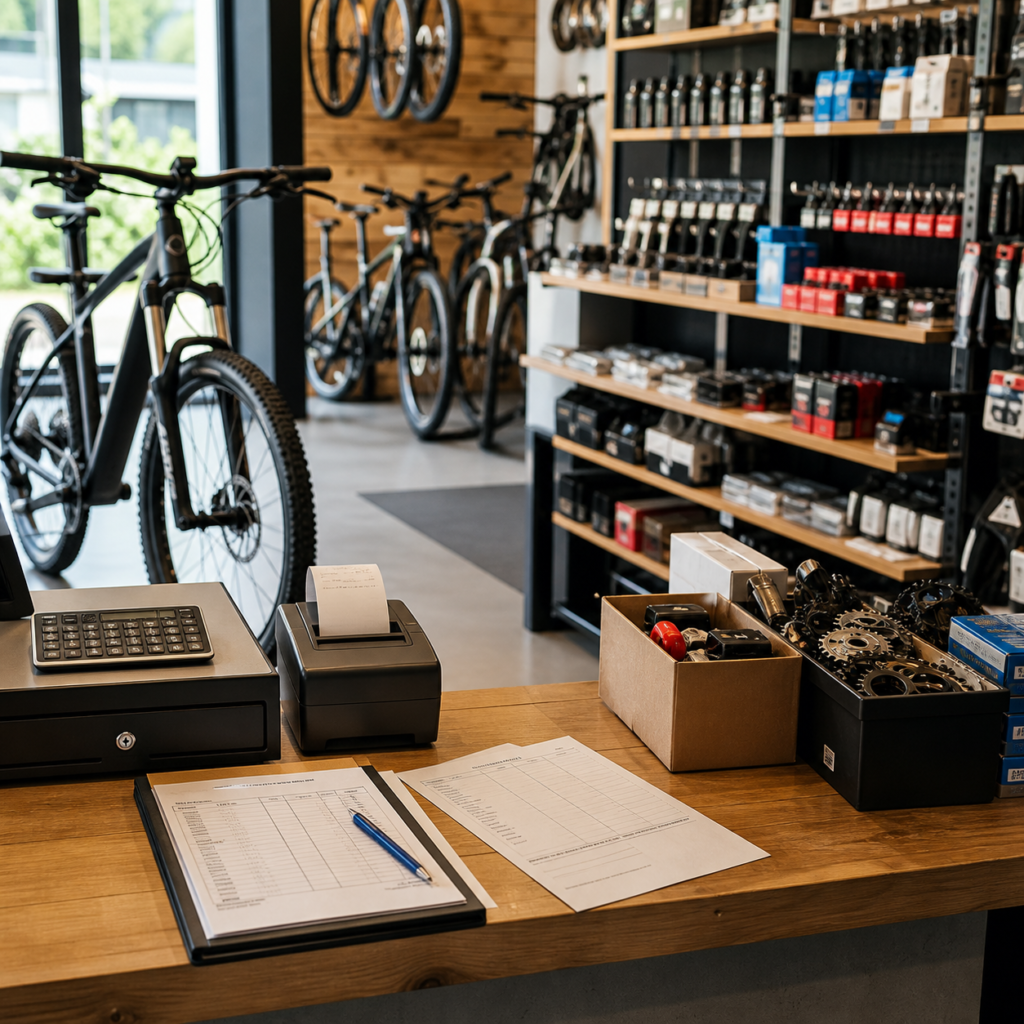
A bicycle shop does not automatically need the biggest inventory system, a complex online store and a pile of add-on tools. In the beginning, many workflows run reasonably well with supplier portals, a cash register, accounting software and spreadsheets. The real question is not: which software is best? It is: when does manual work cost more time, clarity and patience than a suitable software setup?
From my experience as an independent software developer for bicycle businesses, specifically from projects and conversations in Vorarlberg, Austria, the strongest setup is usually not one magic system. It is a clear order of priorities: handle sales correctly, manage purchasing and stock reliably, connect data between systems, and only then add extra sales, workshop or online-store tools.
The basic stack: POS, inventory and accounting
Three software areas matter most for a bicycle shop. First, you need a POS or cash-register system that fits the legal requirements in your country. In Austria, for example, cash-register and receipt obligations can apply once certain thresholds are met. The exact tax assessment should always be checked with an accountant or the official authorities.
Second, you need inventory or merchandise management when purchasing, stock, reservations and delivery dates can no longer be managed reliably by hand. Bikes, sizes, colours, model years, spare parts and accessories add complexity quickly.
Third, accounting needs clean input. That may be a direct integration, regular exports or a disciplined manual process. What matters is that sales, stock movements and documents remain traceable at the end of the month.
When manual work is still reasonable
Many shops start pragmatically. Orders are placed through B2B portals, stock is tracked in lists, checkout runs through a separate solution and accounting follows an established routine. That is not wrong. If the assortment, team and order volume are manageable, a lean manual process can be cheaper than introducing a large system too early.
The turning point comes when the same data is entered several times, delivery dates become unreliable, reserved bikes are missed or staff cannot tell which stock is actually available. At that point the cost is no longer just time. It also affects advice, customer promises and internal confidence.
If that is the problem you are facing, another article on this website goes deeper: how bicycle software, Veloconnect and integrations reduce manual work.
Why the first inventory system is an important decision
Bicycle retailers use specialised systems such as Tridata, Famowa, Advarics, Velo-Port, Cycly, App-Room and others. Some cover a broad range of use cases, some can feel expensive depending on configuration, and some are powerful but less pleasant in everyday use. This is not meant as a vendor ranking. The key question is how well the system fits your daily work.
Switching later can be costly because products, customers, bikes, open orders, history and integrations may all need to move. So do not choose only by today’s price. Also check how well the system handles supplier data, how usable it is for the team and how easily your own data can be exported again.
Does every bicycle shop need an online store?
No. An online store can be useful when it is focused, actively maintained and aligned with assortment, logistics and advice. Without that focus, a local retailer quickly competes with large platforms while its own strength, personal consultation, is hard to reflect in the online price.
For some shops, an in-store digital consultation tool is more valuable than a classic web shop. If customers should compare bikes, see delivery dates or explore models that have not arrived yet, the third article is relevant: workshop software and sales apps for bicycle retailers.
Good selection starts with the process, not the software list
Before comparing vendors, write down the core workflows: How do products enter the system? How is a bike reserved? Who sees delivery dates? How is a service job recorded? Which data does accounting need? Which work is currently done twice?
These answers become a realistic requirement list. It does not need to be perfect. It should simply prevent you from buying a system that has many features but does not solve your recurring bottlenecks.
FAQ
Is a spreadsheet enough for a bicycle shop?
For small and simple workflows, yes, at least at the beginning. It becomes risky when several people need to work with stock, reservations, delivery dates and workshop jobs at the same time.
Which software is mandatory?
No specific bicycle software is mandatory. But fiscal rules around cash registers, receipts and records may apply depending on your country and business size. Check the details with a qualified adviser.
Should I introduce inventory software or an online store first?
In most cases, clean inventory management comes first. An online store without reliable product, stock and delivery data can create more maintenance work than value.
Conclusion
The right software for a bicycle shop is the software that makes daily work noticeably easier: sell correctly, understand stock, keep orders visible and avoid entering the same data repeatedly. Once that foundation is in place, integrations, workshop workflows, consultation tools or an online store can be added with much better judgement.