
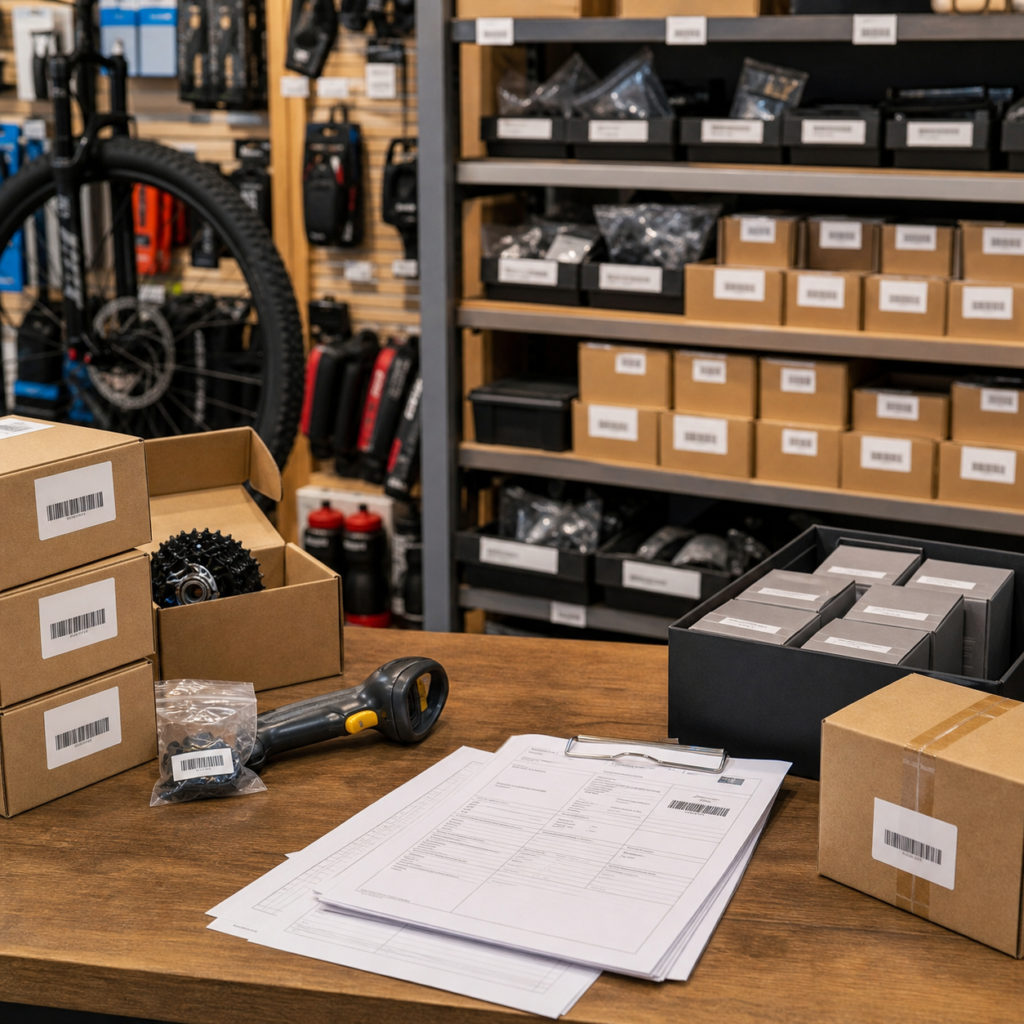
Many bicycle shops do not run on one single system. Inventory software comes from one provider, the POS from another, suppliers have their own portals, accounting needs exports and somewhere there are still spreadsheets. When little is happening, this is annoying but manageable. With more bikes, spare parts, delivery dates and reservations, it quickly becomes duplicate work.
The value of integrations is not technology for its own sake. This perspective comes from practical experience with bicycle businesses in Vorarlberg, Austria: good data connections make sure that products, stock, delivery dates and sales information arrive where they are needed, without staff entering the same information several times.
If you have not chosen the basic software yet
If you are still at the beginning, start with the broader decision: what software does your bicycle shop really need? The foundation article on choosing bicycle shop software covers that. This article begins where several systems already exist or are deliberately combined.
What Veloconnect does for bicycle retail
Veloconnect describes itself as a neutral standard interface for the bicycle industry. It is designed to support automated exchange of product data, availability, orders, documents and sales data between retailers, suppliers, platforms and IT systems.
In practice, Veloconnect is therefore a central term for many bicycle retailers. Many common inventory systems in the bicycle trade offer access or integration. But an interface is not a guarantee that every desired data point arrives in perfect quality.
Product data is only as good as its maintenance
Product numbers, model names, prices, availability and delivery dates matter every day. Images are often more difficult. Images can be part of digital product data, but my experience is that some manufacturers do not provide suitable images, do not provide them completely or do not maintain them reliably enough.
This matters especially when you want to present or compare bikes before they arrive. In that situation, importing a product record is not enough. You need reliable, current and visually useful data. If that is your sales problem, the follow-up article on workshop software and sales apps for bicycle retailers is the better next read.
Typical integration cases in a bicycle shop
A custom integration becomes interesting when two good individual systems should work together. One practical example: a shop uses ready2order for POS and wants to synchronize products from Famowa. The goal is not to rebuild everything. It is to make the data exchange reliable.
- Move products from inventory software into the POS
- Synchronize stock or sales between systems
- Update delivery dates automatically
- Export data for accounting or reporting
- Connect special tools for consultation, reservations or workshop work
When an integration is worth it
An integration is not useful just because it is technically possible. It is useful when manual work repeats often, causes errors or slows down staff. It also matters whether the source data is reliable enough. Bad data does not become good because it is automated; it only spreads faster.
Before implementation, clarify: Which system is the source of truth? How often must data be updated? What happens when values conflict? Who checks errors? And is there an easy way back if an import goes wrong?
Independent advice instead of system sales
I do not sell inventory software. My approach is independent: I look at the systems already in place, where data is maintained twice and which connection would create the most value. Sometimes that is a small export. Sometimes it is a direct integration. And sometimes the honest recommendation is to clarify the internal process first.
FAQ
What is Veloconnect?
Veloconnect is an industry standard for digital data exchange in bicycle retail. It helps retailers, suppliers and IT systems exchange data in a structured way.
Does Veloconnect automatically include all images?
Not reliably in every case. Whether images are available and useful depends heavily on what manufacturers or suppliers actually provide and maintain.
Do I always need a custom integration?
No. If existing exports, standard interfaces or simple processes are enough, that is often cheaper. Custom work becomes useful when recurring manual effort can clearly be avoided.
Conclusion
Good integrations save more than clicks. They reduce errors, make delivery dates more visible and help the team work with the same current data. In bicycle retail, Veloconnect is an important standard, but the best solution comes from matching the standard, data quality and your actual workflows.